
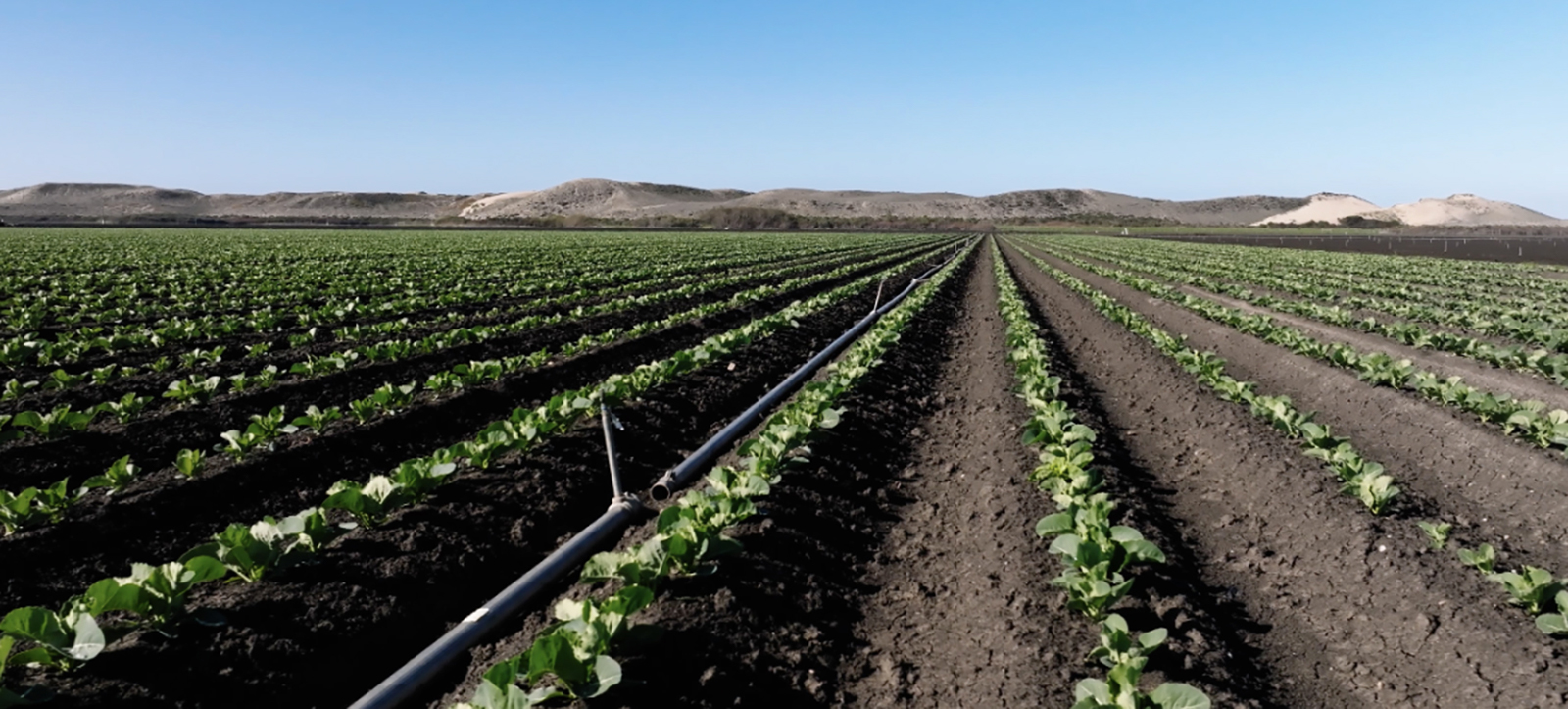
Imagine turning on the tap or opening the irrigation valves and getting salt water. For generations, the Salinas Valley’s fertile soil has been an engine of economic growth and fresh food, sustained by an invisible lifeline: the groundwater beneath our feet.
That lifeline is under threat. As underground levels have dropped, seawater from Monterey Bay has moved inland into the aquifers beneath the northern part of the valley. Falling groundwater levels can recover over time. However, seawater intrusion, once it takes hold, is extremely difficult to undo, and it is the most serious groundwater challenge our valley faces. Protecting our aquifers is a direct investment in our farms, our local economy, and the Salinas Valley’s way of life.
In 2014, California passed the Sustainable Groundwater Management Act (SGMA) to stop the unsustainable use of groundwater and bring basins back into balance. Rather than have the State take over, SGMA gives local communities the first opportunity to design and carry out their own plans. That is why local leaders formed the Salinas Valley Basin Groundwater Sustainability Agency in 2017. But if local efforts fail, the State can step in to manage our groundwater, including limiting pumping and levying its own fees.
The deadlines are real. The Salinas Valley Groundwater Basin is divided into six subbasins. The 180/400-Foot Aquifer Subbasin, closest to the coast, has been designated by the State as critically overdrafted since 2016 and must reach sustainability by 2040; the other subbasins have until 2042.
The good news is that seawater intrusion is a solvable challenge, and the Salinas Valley Basin Groundwater Sustainability Agency (SVBGSA) has a plan to address it. In August, after months of technical analysis and public meetings, the SVBGSA Board of Directors selected a preferred plan known as “Portfolio 3A.” It combines a brackish groundwater recharge project, which would pump and treat brackish groundwater near the coast and then deliver it to Salinas and inject it into the aquifers; recharge basins in the Eastside Subbasin area; improvements to the existing Castroville Seawater Intrusion Project, which delivers recycled water to coastal farms; and demand management, including a 10% reduction in agricultural pumping in the northern valley and measures in the Deep Aquifers and Corral de Tierra.
No option was perfect. An alternative that fully avoided the undesirable results would have cost about $1.31 billion to build. The lowest-cost alternative, at about $612 million, did not address seawater intrusion and relied on doubling cuts to agricultural water use. Portfolio 3A was the only remaining option that substantially addresses seawater intrusion, and it costs about $240 million less to build than the most expensive option. It nearly, but not fully, addresses the seawater intrusion in 180/400 Subbasin but does not address intrusion in Monterey Subbasin. We will keep working on both.
The Board approved the portfolio together with the considerations the Advisory Committee and subbasin committees asked for: bring costs down, pilot and phase projects rather than building everything at once, keep looking for other water supplies, and keep demand management voluntary wherever possible and grounded in the best available science. The plan will be refined project by project. The Board did not approve any individual projects or committed specific funding. Each project still needs planning, environmental review, permitting, financing and a separate Board vote.
Portfolio 3A carries a capital cost of about $1.07 billion, plus about $74 million a year to operate. Because the Salinas Valley grows fresh produce that feeds millions of people across the country, this investment should not fall on local growers, residents and businesses alone. How the local share will be divided among those who benefit has not been decided. That work, known as cost allocation, will take time, and our valley knows from experience how difficult it can be.
Since August, we have worked on refinements on the portfolio. We have begun making the case to California’s congressional delegation and federal agencies for outside investment in a basin of national importance. We are exploring whether new ocean-derived water supplies or other alternative water sources could be added to the solution. With regional partners, we are developing a voluntary land repurposing program, funded by a $10 million state grant, to support willing landowners who choose to convert farmland to uses, such as recharge basins, wetlands or open space. We are also preparing a phased implementation schedule with clear decision points, so that each major investment is made only when the information supports it.
Draft amendments to our Groundwater Sustainability Plans were released for public review in September and will be submitted to the State in January 2027. The integrated implementation path is included in those plan amendments.
Communities across California are asking the same question: we cannot survive without sustainable groundwater, so how will we pay for the infrastructure to protect it? There are funding approaches that share costs fairly, and finding the right one requires the perspectives of the people who depend on this water. Join our public meetings, review the draft plans and help decide how our community invests in its water future. Meeting schedules and ways to get involved are available at svbgsa.org.
Piret Harmon serves as the General Manager for Salinas Valley Basin Groundwater Sustainability Agency.